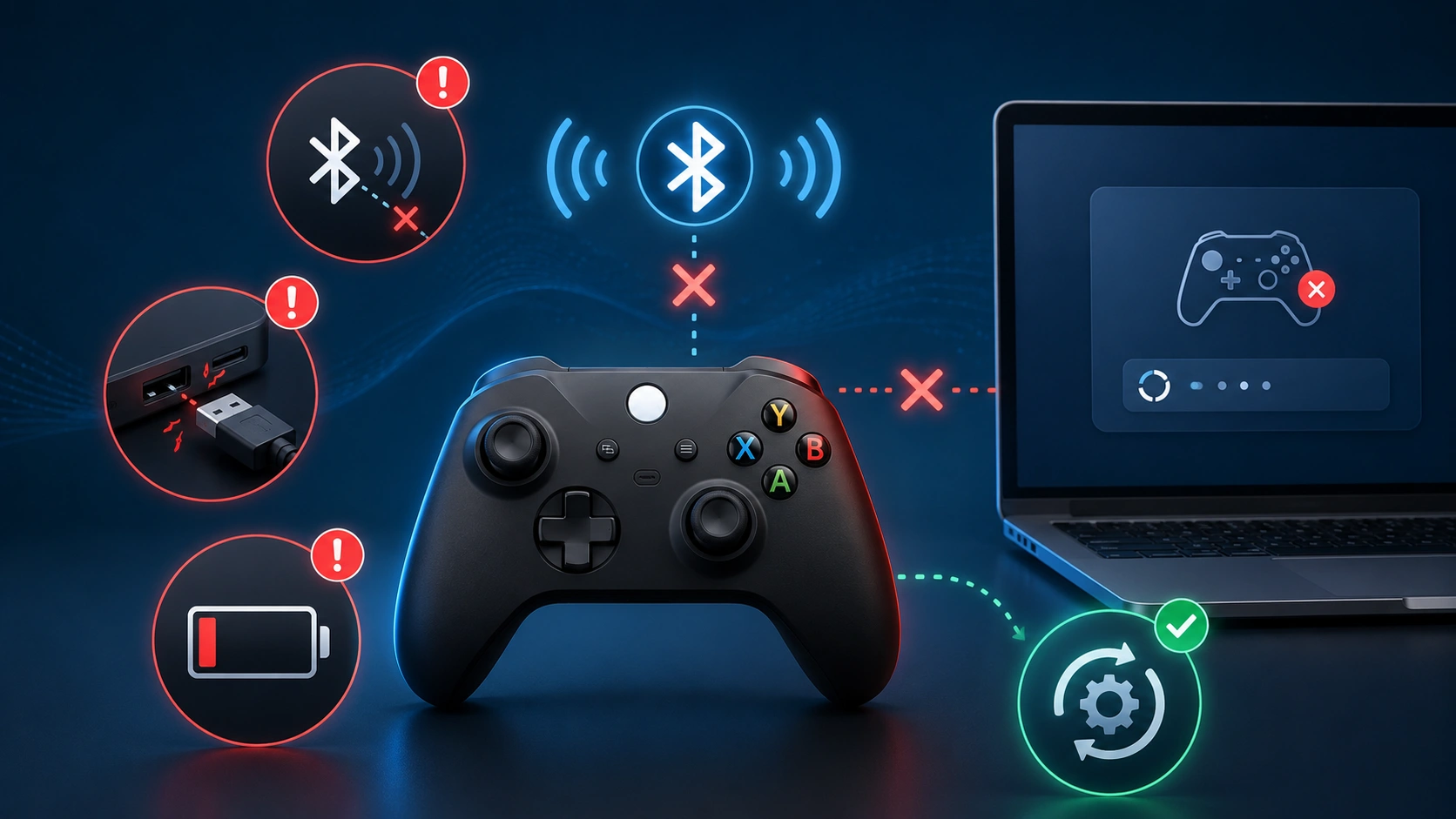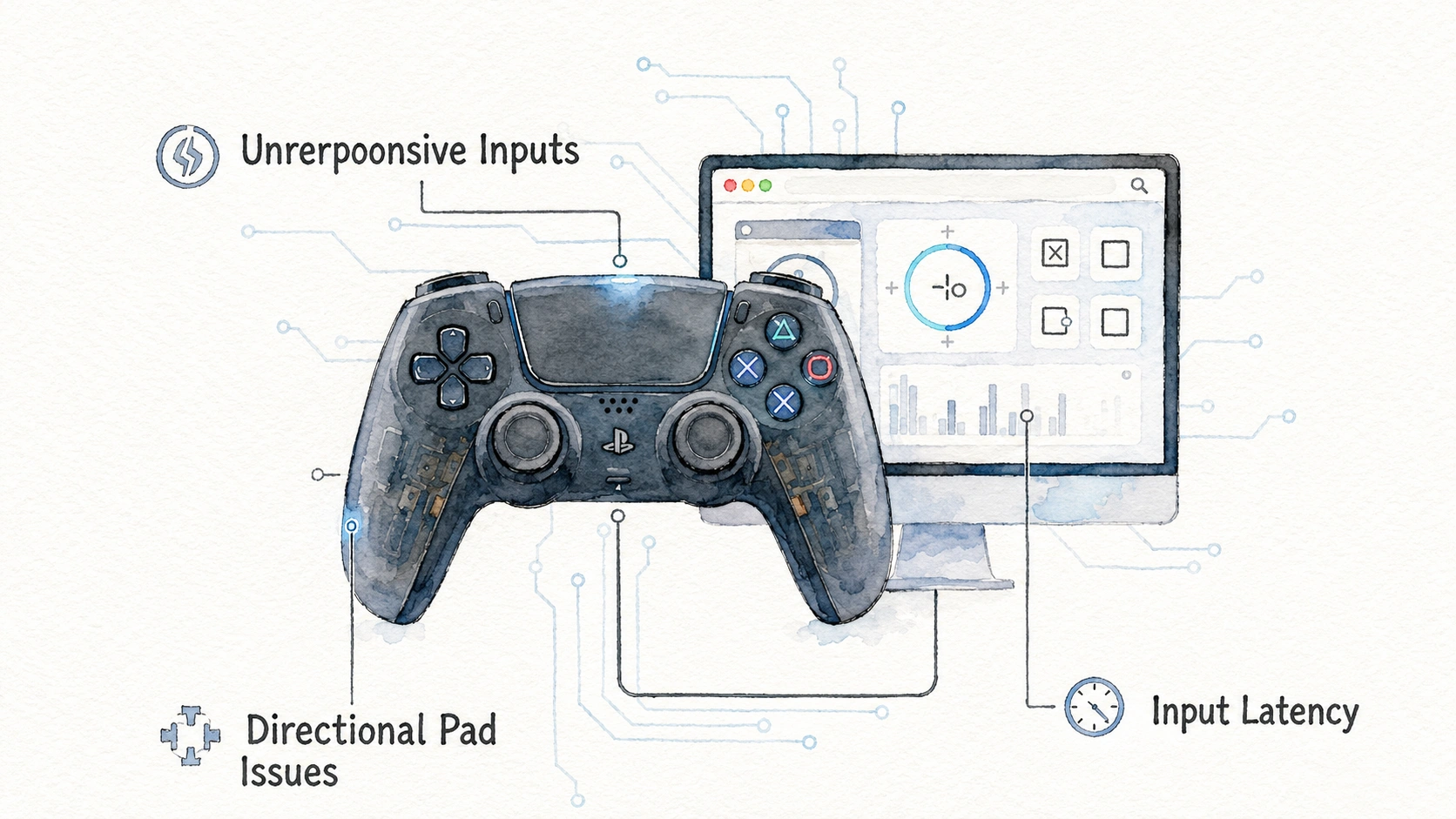

Stick drift has been the most complained about controller problem for years, but the market has actually shifted a lot lately. Controllers that use magnetic sensors instead of the old rubbing contact parts are no longer rare expensive novelties. They are now available at almost every price point, including some genuinely cheap options that work shockingly well.
This guide breaks down which controllers actually resist stick drift in 2026, what technology makes the real difference, and how to avoid wasting money on something that just claims to be drift resistant without actually delivering.
Why This List Looks Different From Older Drift Guides
A few years ago, avoiding stick drift meant paying a premium for a small number of niche controllers. That has changed considerably.
Hall effect joysticks, which use magnetic non-contact sensors instead of a wearable carbon track, have moved from being a rare premium feature to something expected even in mid-range controllers, and even higher precision TMR sensors are now showing up in the competitive esports tier. This means the real question for most shoppers is no longer whether they can afford a drift resistant controller, but which one actually fits their platform and budget.
| Year | General Market Situation |
|---|---|
| A few years back | Hall effect sticks mostly limited to expensive niche or custom controllers |
| Now | Hall effect available even in budget wired controllers under fifty dollars |
| Now | TMR sensors, a more precise magnetic variant, appearing in premium esports controllers |
| Now | High polling rates once exclusive to expensive hardware now common at lower price points |
What Actually Makes a Controller Drift Resistant
Not every controller marketed with fancy language actually uses different internal technology. The real difference comes down to how the stick reads position internally.
| Sensor Type | How It Works | Drift Risk |
|---|---|---|
| Standard potentiometer | Physical arm rubs against a resistive strip | High over time, this is the classic drift cause |
| Hall effect | Magnet and sensor detect position with no physical contact | Very low |
| TMR, Tunnel Magnetoresistance | A more advanced magnetic sensing method with higher precision | Very low, often considered even more precise than standard Hall effect |
A 2025 teardown reportedly found that standard Xbox Series X and S controllers use analog sticks rated for around 400,000 movement cycles before drift starts appearing, while Hall effect sticks from certain brands are rated for over 10 million cycles. That is a massive difference in expected lifespan, and it explains why so many players who switch never look back.
One detail worth paying attention to before buying anything: vague marketing language. A listing that just says “premium sticks” without naming the actual sensor technology is a weaker signal than one that specifically states Hall effect or TMR by name.
Best Overall Pick for Most PC Gamers
For someone who wants strong all-around performance without spending esports level money, one controller consistently comes up across independent reviews as the standout choice.
The GameSir G7 Pro is frequently recommended as offering the best overall experience thanks to its TMR technology and official Xbox licensing. This combination matters because official licensing means smoother plug and play compatibility on Xbox specifically, while TMR sticks push precision a step beyond standard Hall effect.
| Feature | Why It Matters |
|---|---|
| TMR stick technology | Higher precision than standard Hall effect, plus the same drift resistance |
| Official Xbox licensing | Smoother native compatibility without extra software |
| Extra remappable buttons | Useful for competitive setups needing quick access inputs |
| Deep customization software | Lets players fine-tune sensitivity curves and button layouts |
Best Budget Pick Under Fifty Dollars
Price used to be the biggest barrier to owning a drift resistant controller. That barrier has genuinely come down.
The GameSir G7 SE brings Hall Effect sticks and Hall effect triggers into a wired package priced under fifty dollars, which is a meaningful shift from a few years back when this technology was reserved for premium tiers only. Specifically, this wired Xbox controller sells for $44.99 and includes Hall Effect sticks and triggers.
| What You Get at This Price | Compared to Older Budget Controllers |
|---|---|
| Hall effect sticks and triggers | Older budget controllers almost universally used potentiometers |
| Wired USB-C connection | Simple, reliable, no battery or pairing concerns |
| Native Xbox and PC compatibility | No extra software or workaround tools needed on most systems |
This specific controller has been credited with helping push Hall effect technology into the mainstream budget tier rather than keeping it as a premium differentiator, since its existence removed much of the remaining justification for buying a potentiometer based controller at any price point.
Best Wireless Pick for Competitive Play
Wireless competitive players have their own specific needs, mainly around latency and stick precision under pressure.
The Razer Raiju V3 Pro uses Razer’s own TMR thumbstick technology, described as slightly different from traditional Hall effect but equally drift resistant and arguably even more precise, alongside six remappable buttons, four removable back buttons, and triggers that can switch between analog and mouse-click style modes. Its 2.4 GHz wireless connection is built to keep latency minimal, and it stores custom control profiles directly onboard the controller itself.
A similarly positioned option comes up under a slightly different name in other reviews. The Razer Wolverine V3 Pro is highlighted as the best wireless option specifically for competitive play, priced at $199.99.
| Feature | Benefit for Competitive Players |
|---|---|
| TMR thumbsticks | Extra precision beyond standard Hall effect |
| Low latency wireless | Matters heavily in fast paced shooters |
| Onboard profile storage | Custom setups travel with the controller across devices |
| Switchable trigger modes | Adjust between analog feel and instant digital response per game |
Best Pick for Nintendo Switch Players

Joy Con drift has such a well known reputation that a whole market of third party alternatives has grown specifically around solving it.
The 8BitDo Ultimate 2 Bluetooth is built specifically for Switch and Switch 2, offering a drift-free alternative to Nintendo’s own Pro Controller, using TMR joysticks for the same precision and drift-free operation found across other 8BitDo controllers. Given how notorious Joy-Cons are for developing drift, having a dependable Hall effect style option built for Nintendo hardware specifically is genuinely useful, and the switchable trigger modes add extra flexibility across different game genres.
Other guides point to a related model for similar reasons. Switch players are often directed toward the 8BitDo Pro 3 first, mainly because of its Switch 2 compatibility and swappable button layouts.
| Consideration for Switch Owners | Why It Matters |
|---|---|
| Official Joy-Con drift reputation | Widely known issue, driving strong demand for alternatives |
| Third party Hall effect or TMR options | Solve the underlying wear mechanism rather than just cleaning around it |
| Switch 2 compatibility | Worth confirming directly if you own or plan to own newer hardware |
| Motion control support | Check that your chosen alternative still supports motion features you rely on |
Best Budget Option for Multiple Controllers or Backup Use
Some households need several controllers at once, whether for couch co-op or simply keeping a reliable spare on hand.
The 8BitDo Ultimate 2C Wireless is highlighted as delivering Hall Effect sticks, Hall Effect triggers, and 1000Hz polling at a price that is genuinely hard to argue with. This combination of features at a low price point is exactly the kind of shift that has made drift resistant technology accessible beyond just premium buyers.
This option is also considered ideal for Linux gaming setups where plug-and-play compatibility matters, and works well as a backup controller that will not develop drift over time, making it a cost effective way for students, casual gamers, and households running multiple controllers for shared play to get Hall Effect technology across the board.
One physical detail worth knowing before buying: this specific model is noticeably smaller than a standard Xbox or PlayStation controller, and its photos can be misleading about actual size, so checking dimensions ahead of time matters if you have larger hands.
| Use Case | Why This Fits |
|---|---|
| Couch co-op households | Affordable enough to buy multiple units |
| Backup controller | Reliable drift-free option to keep on hand |
| Linux gaming | Plug and play compatibility without extra setup |
| Budget conscious PC gamers | Strong feature set at a genuinely low price |
Best Pick for Competitive FPS Players Wanting Extra Paddles
Some competitive players specifically want extra back paddle buttons alongside drift resistant sticks, mainly for quick access to actions like jumping or reloading without moving a thumb off the stick.
The SCUF VALOR PRO is recommended for competitive FPS players specifically because of its Instant Triggers and four paddle buttons. Reviewers testing this type of controller found that its Hall Effect joysticks provided the expected drift-free performance, with four selectable sensitivity modes, one better suited to general gaming and another offering the precision competitive shooters need.
| Feature | Why Competitive Players Want It |
|---|---|
| Instant Triggers | Faster response than standard analog trigger travel |
| Four back paddles | Remap key actions without moving thumbs off sticks |
| Multiple sensitivity modes | Switch between general use and high precision competitive settings |
| Hall Effect sticks | Long term drift resistance under heavy competitive use |
Comparing All the Picks at a Glance
| Controller | Best For | Sensor Type | Approximate Price |
|---|---|---|---|
| GameSir G7 Pro | Best overall PC pick | TMR | Mid-range |
| GameSir G7 SE | Best budget wired pick | Hall Effect | $44.99 |
| Razer Wolverine V3 Pro / Raiju V3 Pro | Best wireless competitive pick | TMR | $199.99 |
| 8BitDo Ultimate 2 Bluetooth | Best Switch and Switch 2 pick | TMR | Mid-range |
| 8BitDo Ultimate 2C Wireless | Best budget backup or multi-controller pick | Hall Effect | Budget tier |
| SCUF Valor Pro | Best for competitive FPS with extra paddles | Hall Effect | Premium tier |
Hall Effect Versus TMR: Does the Difference Actually Matter
Many guides treat these two magnetic sensor types as basically the same thing, but there is a real technical difference worth understanding before choosing between them.
Both Hall effect and TMR sensors are non-contact magnetic designs, but TMR offers higher signal resolution compared to standard Hall effect parts. In practical terms, Hall Effect measures voltage changes caused by magnetic fields, while TMR measures resistance changes as magnetic fields alter electron tunneling through extremely thin barriers, and this generally translates into higher sensitivity, greater precision, and improved durability compared to standard Hall Effect sensors.
| Sensor Type | Precision Level | Typical Price Tier |
|---|---|---|
| Standard Hall Effect | Very good, solves drift completely | Budget to mid-range |
| TMR | Slightly higher precision and sensitivity | Mid-range to premium |
For most casual and even serious non-competitive players, standard Hall effect already solves the actual drift problem completely. TMR becomes more relevant specifically for competitive players chasing every small precision advantage.
Warning Signs of Fake or Weak Drift Resistant Claims
Not every controller advertised as drift resistant actually backs that claim up with real sensor technology.
A useful rule is to avoid any controller that does not list the specific Hall Effect sensor model, such as ALPS or K-Silver branded parts, since vague claims without naming an actual sensor often mean cheaper, less reliable components are being used instead.
Other Warning Signs to Watch For
- Product descriptions that use words like “premium sticks” or “enhanced sticks” without naming an actual sensor technology
- Reviews or listings with no mention of expected cycle life or durability testing
- Prices that seem unusually low even compared to other genuinely Hall effect budget options
- No clear distinction made between the sticks and triggers, since some cheaper options only apply Hall effect to one part and not the other
| Red Flag | What It Usually Means |
|---|---|
| No named sensor brand or model | Likely a lower quality or unverified magnetic sensor, or possibly still potentiometer based |
| Vague marketing language | Company may be relying on buzzwords rather than real technology |
| Unusually low price compared to similar listed specs | Worth double checking reviews and teardown reports before buying |
| Only sticks mentioned, not triggers | Triggers may still use older wear-prone technology |
Controllers to Be Cautious About in 2026
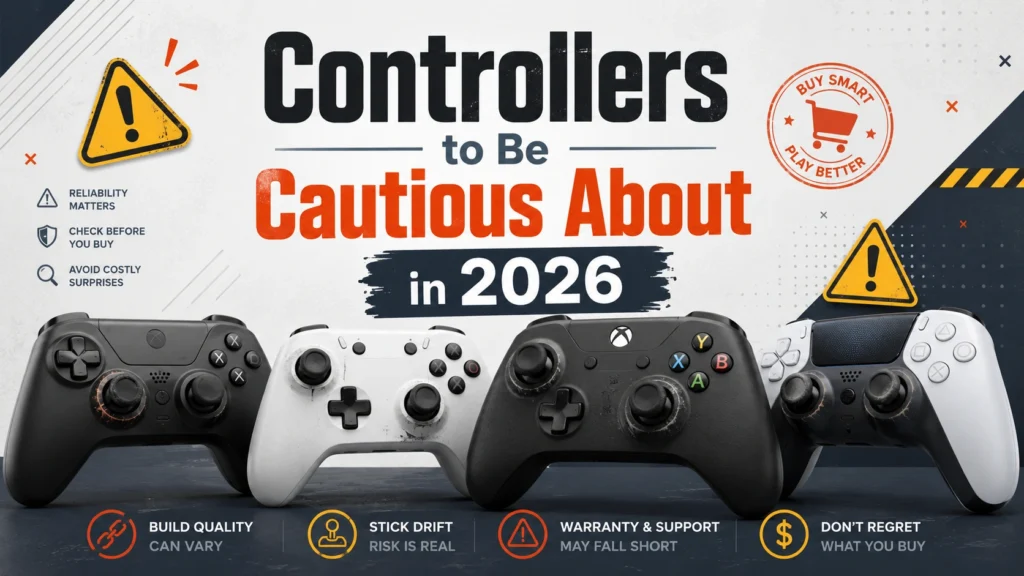
Not every popular controller has made the switch to drift resistant technology, even among well known official console controllers.
Both major official console controllers commonly recommended in mainstream roundups still use potentiometer-based analog sticks, meaning they will drift on largely the same general timeline as every previous controller generation before them, and recommending them without mentioning this is a common issue among affiliate-driven buying guides.
This does not mean official controllers are bad or worth avoiding entirely, especially for casual players who game a few hours a week. It simply means buyers going in should understand exactly what technology they are getting for their money.
How to Test Whether Your New Controller Actually Resists Drift
Buying a Hall effect or TMR controller is not a guarantee against every possible issue, so testing after purchase still matters.
Steps for a Proper Check
- Connect the controller to a PC and open a browser based gamepad tester.
- Leave the stick completely untouched and confirm the on-screen indicator stays perfectly still.
- Move the stick in slow full circles and check for a smooth complete circle with no jumps.
- Push to each of the eight main directions and confirm full range is reached cleanly.
- Repeat this test after a few weeks of regular use to confirm nothing has changed.
| Test Result | What It Confirms |
|---|---|
| Dot stays completely still at rest | Sensor technology is working as expected |
| Smooth full range movement | No mechanical obstruction or manufacturing defect |
| Consistent results over repeated testing | Genuine long term reliability, not just a good first impression |
You can also use a deadzone testing tool to check whether small stick movements register correctly near the centre.
Frequently Asked Questions
Are Hall Effect Controllers Completely Immune to Every Possible Problem?
No. They solve the specific contact wear issue that causes most drift, but dust, manufacturing defects, and physical damage can still cause other unrelated problems.
Is TMR Always Worth Paying Extra for Over Standard Hall Effect?
For most players, standard Hall effect already solves drift completely, so TMR mainly appeals to competitive players chasing small precision gains rather than being a necessity for everyone.
Can I Trust Any Controller That Says “Premium Sticks” Without More Detail?
Not fully. Vague language without naming an actual sensor technology is a common warning sign worth checking further before buying.
Do Budget Hall Effect Controllers Perform Noticeably Worse Than Expensive Ones?
Not necessarily for basic drift resistance, since the core magnetic sensing principle is the same, though premium options often add extra features like additional buttons, higher polling rates, or more refined build quality.
Will Official Xbox and PlayStation Controllers Ever Switch to Hall Effect Sticks?
Some official controllers have started incorporating this technology in certain premium models, though standard console bundled controllers have generally been slower to adopt it compared to third party accessory brands.
Does Switching to a Hall Effect Controller Mean I Never Need to Clean It?
No, dust and debris can still interfere with the physical movement of the stick mechanism itself, so periodic cleaning remains a good habit even with drift resistant technology.
Is It Worth Replacing a Working Potentiometer Controller Just to Avoid Future Drift?
This depends on how much you play and how frustrating past drift experiences have been. Heavy daily players often find the switch worthwhile, while casual players may get several years of trouble-free use from a standard controller anyway.